Categories
Resource Centre - Media & Press

Next Generation Pathogen Genome Sequencing Trainings in Bangladesh

Bangladeshi scientists participate in next generation genome sequencing of SARS-CoV-2 genome

In November 2022, The Child Health Research Foundation (CHRF) of Bangladesh announced that, for the first time, the SARS-CoV-2 genome was sequenced at the Next generation sequencing Research and Innovation Lab, Chittagong (NRICh). CHRF stated, “With support from our friends at FIND, CHRF helped set up the lab and provided training for its members. We will continue decentralising genomics and building scientists for Bangladesh.”

Read more about this achievement here

Categories
Add Resources - Awareness & Advocacy Resource Centre - Media & Press

ACT-Accelerator Diagnostics Pillar Explainer Tool

What is the ACT Accelerator?

The Access to COVID-19 Tools (ACT) Accelerator was created after the outbreak of the SARS-COV-2 pandemic in 2020. 

It is a global collaboration that uses existing public health infrastructure and expertise to accelerate the development and production of Covid-19 tests, treatments, and vaccines. It also focuses on providing equitable access to diagnostics and treatment.

The ACT Accelerator was launched in April 2020. 

It has played a significant role in supporting the fasted and best coordinated global effort in history to fight a disease.

Its current focus is on scaling up access to Covid-19 tools worldwide.

Who are the convenors?

The ACT-Accelerator is co-convened by leading global health organizations.

It consists of three pillars and two or three partner agencies managing these.

What are the three pillars?

The three pillars of the ACT-Accelerator are the vaccines pillar, the diagnostics pillar, and the therapeutics pillar.

What does each pillar do?

The Vaccines Pillar has set a goal to rapidly rollout at least 2 billion vaccine doses in 2021 to high risk groups. It also has a goal to expand research and development. 

Its third task is to identify new and emerging risks from variants of the SARS-COV2 virus.

The Diagnostics Pillar aims to identify new diagnostics and devliver 900 million high-quality tests by the end of 2021 to low- and low-middle income countries.

The Therapeutics Pillar promote research for effective treatments and ensure that countries optimize clinical care including the use of corticosteroids and medical oxygen for severe and critical patients. It also seeks to introduce new therapies and distribute up to 100 million treatment courses for populations in low and middle-income countries.

What does the Health Systems Connector do?

The Health Systems Connector (HSC) works across the three product pillars to identify and address bottlenecks in health systems worldwide and to enable the rollout of Covid-19 tools. The HSC also focuses on the rollout of personal protective equipment to health workers. 

 What is the role of the Access & Allocation workstream?

This workstream focuses on ensuring global equity and the allocation of Covid-19 resources. It also ensures that civil society and community engagement are integrated across all the pillars.

Categories
Add Resources - Manufacturing Resource Centre - Media & Press

Africa CDC, FIND Partner to Build Capacity for COVID-19 Rapid Diagnostic Tests in Africa

New partnership to prepare for rapid antigen testing in Africa

On September 11, 2022 the Foundation for Innovative New Diagnostics (FIND) and the Africa Centres for Disease Control and Prevention (Africa CDC) announced a new partnership to prepare for the introduction of new high quality antigen rapid diagnostic tests for Covid-19 over the next three years.

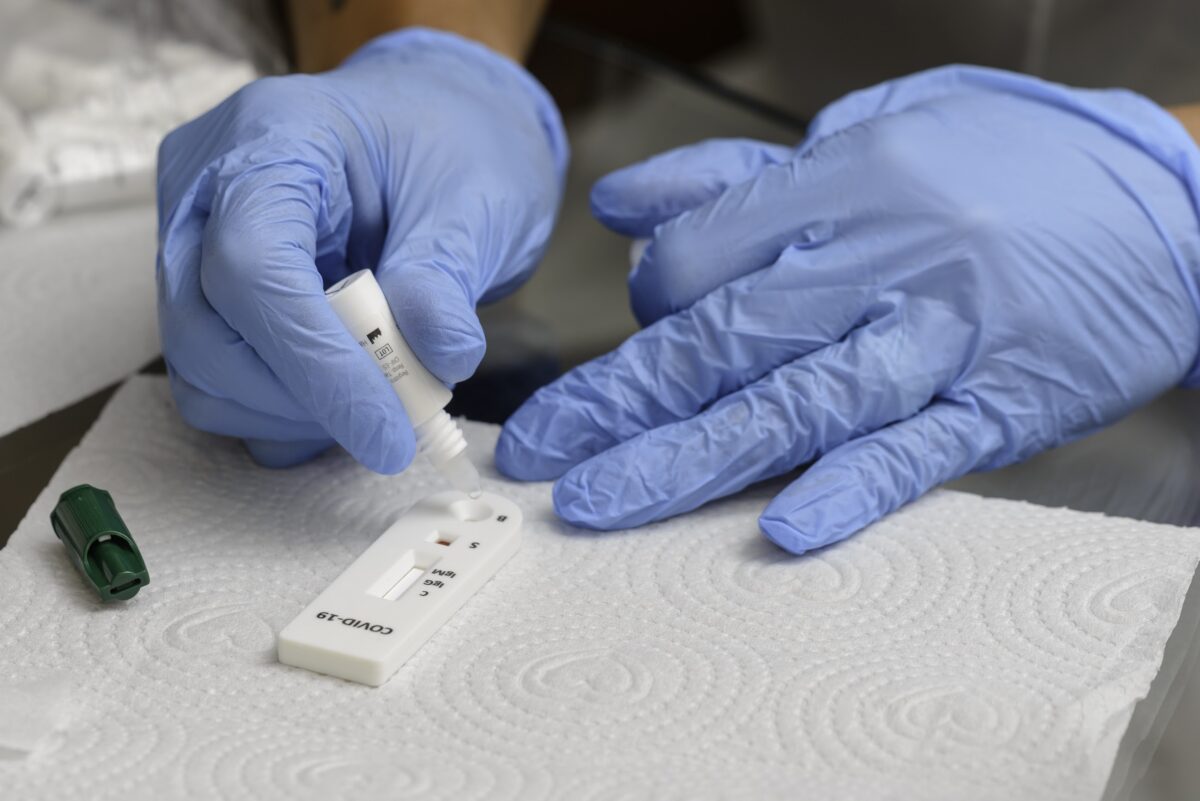
Fast and reliable testing has emerged as a cornerstone of the global response to the COVID-19 pandemic but has only sometimes been available to African countries during the pandemic. 

Access to diagnostics also presents a significant hurdle in the fight against Covid-19 and other diseases, including TB and malaria.

Regulatory interventions have smoothed out the supply of accurate and fast antigen tests, but it has now become necessary to build capacity to ensure a speedy rollout.

While there have always been global inequities in accessing diagnostics, these became clearer and worse during the Covid-19 pandemic, with supply chain wars and quality issues impacting heavily on the situation.

In response to the announcement Dr. John Nkengasong, Director of Africa CDC, stressed the importance of fast and accurate results so that patients can be isolated and health workers can trace close contacts, especially in low- and middle-income countries (LMICs).

Categories
Add Resources - Research & Development Featured Work - Manufacturing Featured Work - Procurement & Supply Management Resource Centre - Media & Press

Global Partnership to Make Available 120 Million Affordable, Quality COVID-19 Rapid Tests for Low- and Middle-Income Countries

Rapid tests are a fast and accurate way to diagnose patients in a primary healthcare setting

Global partnership feeds healthy supply of rapid COVID-19 tests to low- and middle-income countries 

A set of global agreements reached in September 2020 paved the way for 120 million rapid COVID-19 tests to be distributed to low and middle-income countries.

The Access to COVID-19 Tools (ACT) Accelerator, working with other organizations, concluded these agreements to enable the manufacture, distribution and rollout of these vital diagnostic tools.

At the time, there was a huge unmet need for fast diagnostic testing globally, especially in the low and middle-income bracket.

The Africa Centres for Disease Control and Prevention (Africa CDC), the Bill & Melinda Gates Foundation, the Clinton Health Access Initiative (CHAI), the Foundation for Innovative New Diagnostics (FIND), the Global Fund, Unitaid, and World Health Organization (WHO) all worked on this project.

There was a particular focus on making tests available to countries without extensive laboratory facilities or trained health workers to implement molecular (polymerase chain reaction or PCR) tests.

Why is testing crucial in the fight against COVID-19?

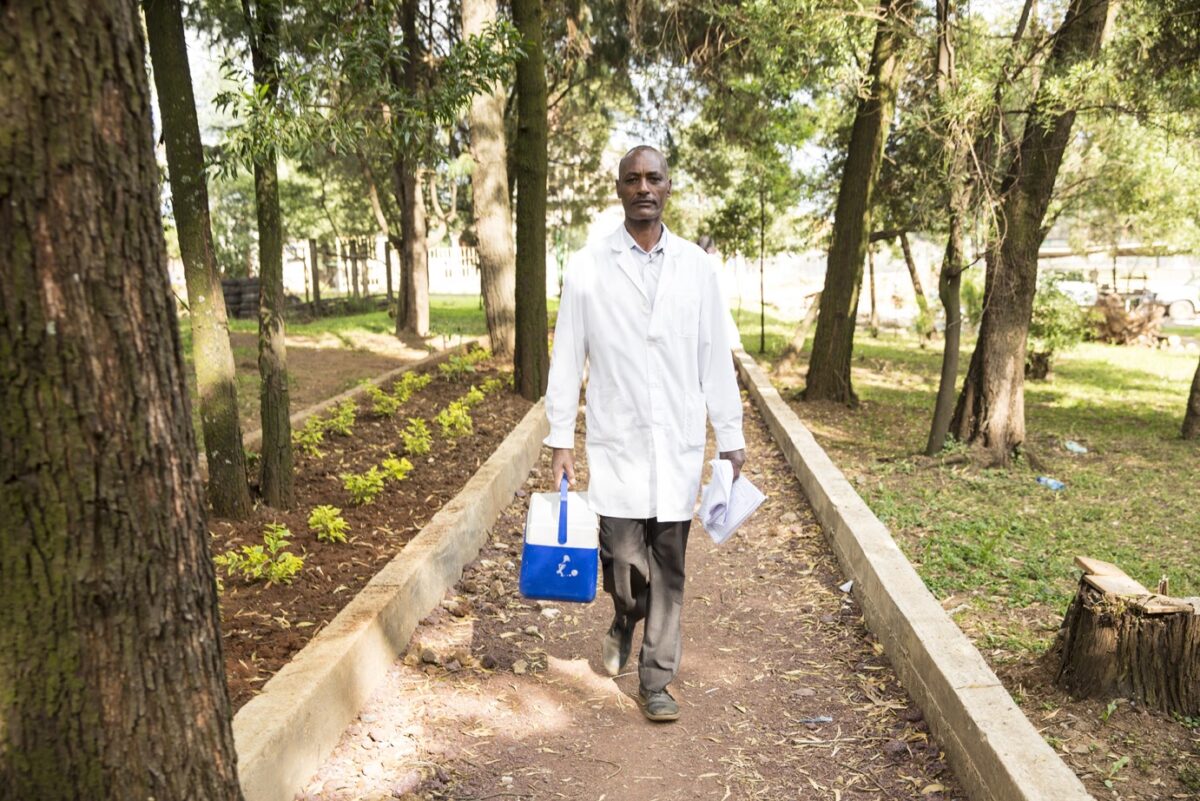
Rapid tests are a fast and accurate way to diagnose patients in a primary healthcare setting, as this is where most people access services. 

Rapid tests are also cheaper than laboratory tests. With a fast initial diagnosis, track and trace teams in more remote and rural areas can start work sooner without waiting for laboratory test results. 

Quick results can prevent the virus from spreading in communities. Rural and remote healthcare settings especially need access to rapid testing, as accessing centralized laboratory services can take a long time.

Procurement

The Global Fund made $50-million available to purchase 10 million tests per country.

Distribution

FIND and WHO supported countries in distributing these tests.

Unitaid and the Africa CDC combined resources rollout tests to countries in Africa from October 2020. 

Categories
Resource Centre - Media & Press

FIND and Bioaster Collaborate on Clinical Research to Assess Duration of Immune response in Patients with COVID-19

The study was to evaluate how effective serological tests (antibody tests) are in detecting a durable immune response to SARS-COV-2.

Study to investigate efficacy of antibody testing in patients’ immune response to COVID-19

In October 2020, the Foundation for Innovative New Diagnostics (FIND) and French Microbiology Technology Research Institute, BIOASTER, announced a joint clinical study to investigate the efficacy of antibody testing for COVID-19.

The aim was to improve understanding of how the immune response in affected patients changed over time. 

The study evaluated how effective serological tests (antibody tests) are in detecting a durable immune response to SARS-COV-2.

At the time, no vaccines were available, and information on naturally acquired immune responses in people infected with the virus was vital. 

FIND co-convenes the Diagnostics Pillar of the Access to COVID-19 Tools (ACT) Accelerator, and this study was part of its work.

The study examined antibody responses of patients seeking care at the Hospices Civils de Lyon and Centre Hospitalier Annecy Genevois in France. 

The plan was also to gather future antibody test data from low- and middle-income countries. 

Dr. Catharina Boehme, CEO of FIND, said at the time that it was not clear how human immunity would change, as people got infected and recovered. 

Categories
Resource Centre - Media & Press

Global Fund, United States and Unitaid Launch “Test-and-Treat” Programs at Second Global COVID-⁠19 Summit

Why do we not use antibody tests to diagnose COVID-19 infections?

Checking for antibodies is not the most accurate indicator of the presence of a SARS-COV-2 infection.

What are antibody tests?

This article explains the role antibody tests are playing in fighting the pandemic. 

Antibodies neutralize foreign cells the body sees as a threat. Most COVID-19 vaccines trigger the body to produce antibodies against the spike protein in the SARS-COV-2 virus. 

The spike protein is a molecule found on the surface of the virus, and it helps the virus to enter the host cells and spread from there. 

Why can’t we use antibody testing to measure vaccine efficacy?

COVID-19 serology tests were designed early in the pandemic to detect only a few antibodies generated by natural infection, not vaccine-induced immunity.

They detect antibodies produced to fight the protein capsule around the virus and not the spike protein, while most COVID-19 vaccines introduce the body to small amounts of the genetic material in the spike protein to elicit an immune reaction.

Can antibody testing determine if a vaccine worked?

Not precisely. It takes around two weeks for the body to generate antibodies after COVID-19 vaccination, so even tests to detect the “right” antibody could be negative in the first few weeks after vaccination. 

Can antibody tests be wrong?

The United States Food and Drug Administration (FDA) has recommended that antibody testing not be used to evaluate either immunity levels or protection levels from SARS-COV-2.

Why still do antibody tests?

Data from antibody tests are helpful for surveillance studies. In these studies, large numbers of people in a community are tested. These studies estimate how many people were infected in the past and how fast the virus spreads. 

Categories
Add Resources - Awareness & Advocacy Resource Centre - Media & Press

Low testing rates and constrained access to vaccines – a deadly combination?

Diagnostics constitutes the most significant funding gap within the ACT Accelerator”

Low testing rates and constrained access to vaccines – a deadly combination?


In this opinion piece Peter Sands, Director of the Global Fund to Fight AIDS, tuberculosis, and malaria, and Emma Hannay, Find’s Chief Access Officer, argue for a global refocus on testing to fight the COVID-19 pandemic.

They highlight the stark inequalities in COVID-19 testing between high-, middle- and low-income countries, saying that this can create conditions for a more severe and contagious mutation of SARS-COV-2 to emerge unnoticed.

The authors add that diagnostics constitutes the most significant funding gap within the ACT Accelerator.


The statistics:

  • Germany offers a free test a week
  • England offers two free tests a week
  • Lower-income countries can only test 7 people for every 100 000
  • For every test done in lower-income countries, high-income countries test 86 people
  • According to a survey of 24 African countries, only 11% could offer rapid COVID-19 tests, and only 8% could provide PCR tests
  • Globally, there is an $8.7-billion shortfall in testing and lab capacity. Box ends

“The low availability of testing, coupled with constrained access to vaccines, create a perfect environment for new, more contagious, and perhaps more deadly strains of the COVID-19 virus to emerge without initial notice, putting even vaccinated populations at risk” – Peter Sands and Emma Hannay.

Categories
Add Resources - Awareness & Advocacy Resource Centre - Media & Press

One year into the Covid-19 pandemic, testing is as vital as ever

Why do we not use antibody tests to diagnose COVID-19 infections?

Checking for antibodies is not the most accurate indicator of the presence of a SARS-COV-2 infection.

What are antibody tests?

This article explains the role antibody tests are playing in fighting the pandemic. 

Antibodies neutralize foreign cells the body sees as a threat. Most COVID-19 vaccines trigger the body to produce antibodies against the spike protein in the SARS-COV-2 virus. 

The spike protein is a molecule found on the surface of the virus, and it helps the virus to enter the host cells and spread from there. 

Why can’t we use antibody testing to measure vaccine efficacy?

COVID-19 serology tests were designed early in the pandemic to detect only a few antibodies generated by natural infection, not vaccine-induced immunity.

They detect antibodies produced to fight the protein capsule around the virus and not the spike protein, while most COVID-19 vaccines introduce the body to small amounts of the genetic material in the spike protein to elicit an immune reaction.

Can antibody testing determine if a vaccine worked?

Not precisely. It takes around two weeks for the body to generate antibodies after COVID-19 vaccination, so even tests to detect the “right” antibody could be negative in the first few weeks after vaccination. 

Can antibody tests be wrong?

The United States Food and Drug Administration (FDA) has recommended that antibody testing not be used to evaluate either immunity levels or protection levels from SARS-COV-2.

Why still do antibody tests?

Data from antibody tests are helpful for surveillance studies. In these studies, large numbers of people in a community are tested. These studies estimate how many people were infected in the past and how fast the virus spreads. 

Categories
Add Resources - Scaling Up & Sustainability

Nigerian study on public acceptance of COVID-19 self-testing

This article, published in BMJ Open in January 2023, details a study on people’s willingness to use COVID-19 self-testing in Nigeria.

Nigeria has been badly affected by the COVID-19 pandemic, and poor testing coverage in the country may make controlling the spread more difficult.

This original research is a cross-sectional survey to assess the general public’s acceptability of SARS-CoV-2 self-testing as an approach to help address this challenge.

It concluded that most Nigerians agree with the concept of self-testing and would act to protect public health if they self-tested positive.

Read more here

Categories
Add Resources - Scaling Up & Sustainability

COVID-19 self-testing at Georgia nursing home

FIND and the Georgian National Center for Disease Control and Public Health (NCDC) have implemented a self-testing model to increase access to diagnostics for staff at high risk of exposure, including healthcare workers and staff at nursing homes. The model also is designed to reduce COVID-19 transmission in healthcare settings. 

This YouTube video, in Georgian with English sub-titles, describes the introduction of COVID-19 self-testing among nursing home staff in Georgia.

More than 100 nursing home staff and their household members across two nursing homes in Tbilisi and Kutaisi participated in this pilot programme.

It is an example of how optimization of COVID-19 self-testing service delivery strategies to different contexts and populations is key to reduce transmission and improve access to care.

Watch the video here