Categories
Resource Centre - Media & Press

Vaccines Alone Won’t Defeat the Variants

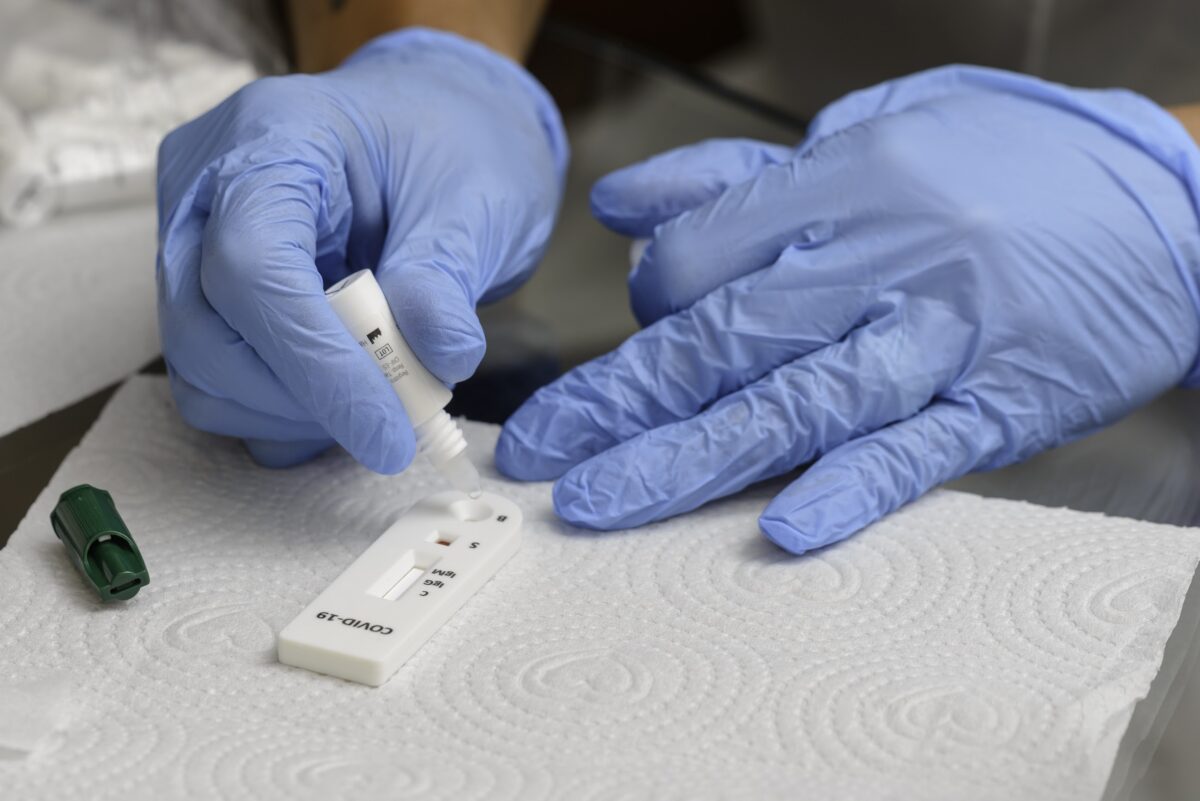
Why do we not use antibody tests to diagnose COVID-19 infections?

Checking for antibodies is not the most accurate indicator of the presence of a SARS-COV-2 infection.

What are antibody tests?

This article explains the role antibody tests are playing in fighting the pandemic. 

Antibodies neutralize foreign cells the body sees as a threat. Most COVID-19 vaccines trigger the body to produce antibodies against the spike protein in the SARS-COV-2 virus. 

The spike protein is a molecule found on the surface of the virus, and it helps the virus to enter the host cells and spread from there. 

Why can’t we use antibody testing to measure vaccine efficacy?

COVID-19 serology tests were designed early in the pandemic to detect only a few antibodies generated by natural infection, not vaccine-induced immunity.

They detect antibodies produced to fight the protein capsule around the virus and not the spike protein, while most COVID-19 vaccines introduce the body to small amounts of the genetic material in the spike protein to elicit an immune reaction.

Can antibody testing determine if a vaccine worked?

Not precisely. It takes around two weeks for the body to generate antibodies after COVID-19 vaccination, so even tests to detect the “right” antibody could be negative in the first few weeks after vaccination. 

Can antibody tests be wrong?

The United States Food and Drug Administration (FDA) has recommended that antibody testing not be used to evaluate either immunity levels or protection levels from SARS-COV-2.

Why still do antibody tests?

Data from antibody tests are helpful for surveillance studies. In these studies, large numbers of people in a community are tested. These studies estimate how many people were infected in the past and how fast the virus spreads. 

Categories
Resource Centre - Media & Press

COVID-19: why we can’t use antibody tests to show that vaccines are working

Why do we not use antibody tests to diagnose COVID-19 infections?

Checking for antibodies is not the most accurate indicator of the presence of a SARS-COV-2 infection.

What are antibody tests?

This article explains the role antibody tests are playing in fighting the pandemic. 

Antibodies neutralize foreign cells the body sees as a threat. Most COVID-19 vaccines trigger the body to produce antibodies against the spike protein in the SARS-COV-2 virus. 

The spike protein is a molecule found on the surface of the virus, and it helps the virus to enter the host cells and spread from there. 

Why can’t we use antibody testing to measure vaccine efficacy?

COVID-19 serology tests were designed early in the pandemic to detect only a few antibodies generated by natural infection, not vaccine-induced immunity.

They detect antibodies produced to fight the protein capsule around the virus and not the spike protein, while most COVID-19 vaccines introduce the body to small amounts of the genetic material in the spike protein to elicit an immune reaction.

Can antibody testing determine if a vaccine worked?

Not precisely. It takes around two weeks for the body to generate antibodies after COVID-19 vaccination, so even tests to detect the “right” antibody could be negative in the first few weeks after vaccination. 

Can antibody tests be wrong?

The United States Food and Drug Administration (FDA) has recommended that antibody testing not be used to evaluate either immunity levels or protection levels from SARS-COV-2.

Why still do antibody tests?

Data from antibody tests are helpful for surveillance studies. In these studies, large numbers of people in a community are tested. These studies estimate how many people were infected in the past and how fast the virus spreads. 

Categories
Add Resources - Awareness & Advocacy Resource Centre - Media & Press

Low testing rates and constrained access to vaccines – a deadly combination?

Diagnostics constitutes the most significant funding gap within the ACT Accelerator”

Low testing rates and constrained access to vaccines – a deadly combination?


In this opinion piece Peter Sands, Director of the Global Fund to Fight AIDS, tuberculosis, and malaria, and Emma Hannay, Find’s Chief Access Officer, argue for a global refocus on testing to fight the COVID-19 pandemic.

They highlight the stark inequalities in COVID-19 testing between high-, middle- and low-income countries, saying that this can create conditions for a more severe and contagious mutation of SARS-COV-2 to emerge unnoticed.

The authors add that diagnostics constitutes the most significant funding gap within the ACT Accelerator.


The statistics:

  • Germany offers a free test a week
  • England offers two free tests a week
  • Lower-income countries can only test 7 people for every 100 000
  • For every test done in lower-income countries, high-income countries test 86 people
  • According to a survey of 24 African countries, only 11% could offer rapid COVID-19 tests, and only 8% could provide PCR tests
  • Globally, there is an $8.7-billion shortfall in testing and lab capacity. Box ends

“The low availability of testing, coupled with constrained access to vaccines, create a perfect environment for new, more contagious, and perhaps more deadly strains of the COVID-19 virus to emerge without initial notice, putting even vaccinated populations at risk” – Peter Sands and Emma Hannay.

Categories
Add Resources - Awareness & Advocacy Resource Centre - Media & Press

One year into the Covid-19 pandemic, testing is as vital as ever

Why do we not use antibody tests to diagnose COVID-19 infections?

Checking for antibodies is not the most accurate indicator of the presence of a SARS-COV-2 infection.

What are antibody tests?

This article explains the role antibody tests are playing in fighting the pandemic. 

Antibodies neutralize foreign cells the body sees as a threat. Most COVID-19 vaccines trigger the body to produce antibodies against the spike protein in the SARS-COV-2 virus. 

The spike protein is a molecule found on the surface of the virus, and it helps the virus to enter the host cells and spread from there. 

Why can’t we use antibody testing to measure vaccine efficacy?

COVID-19 serology tests were designed early in the pandemic to detect only a few antibodies generated by natural infection, not vaccine-induced immunity.

They detect antibodies produced to fight the protein capsule around the virus and not the spike protein, while most COVID-19 vaccines introduce the body to small amounts of the genetic material in the spike protein to elicit an immune reaction.

Can antibody testing determine if a vaccine worked?

Not precisely. It takes around two weeks for the body to generate antibodies after COVID-19 vaccination, so even tests to detect the “right” antibody could be negative in the first few weeks after vaccination. 

Can antibody tests be wrong?

The United States Food and Drug Administration (FDA) has recommended that antibody testing not be used to evaluate either immunity levels or protection levels from SARS-COV-2.

Why still do antibody tests?

Data from antibody tests are helpful for surveillance studies. In these studies, large numbers of people in a community are tested. These studies estimate how many people were infected in the past and how fast the virus spreads. 

Categories
Featured Work - Scaling Up & Sustainability

The Global Fund’s COVID-19 Response Mechanism (C19RM)

First established in April 2020, the Global Fund’s COVID-19 Response Mechanism (C19RM) was designed to rapidly respond to the global health emergency created by SARS-CoV-2. Building on 20 years of experience in fighting three of the deadliest infectious diseases, and using its comparative advantages in procurement, deployment at scale and existing relationships with implementing countries and communities, the Global Fund was swiftly able to step up its COVID-19 response.

Since first establishing C19RM, the Global Fund has been able to expand, refine and develop the mechanism. It learned lessons and responded as the pandemic evolved and adapted to changing country needs and the availability of new tools such as self-testing and oral antivirals.

Through C19RM, the Global Fund has been the primary source of funding for all COVID-19 tools, except vaccines. Thanks to the generous backing of donors, the Global Fund has awarded over US$4.9 billion since March 2020 to 109 low- and middle-income countries (LMICs) and 22 multi-country programs, to support health and community health workers and communities fight and recover from COVID-19.  

The Global Fund has been able to support LMICs in responding to the new virus, mitigating the knock-on impact on HIV, TB and malaria programs and protecting the health services. C19RM support included providing access to diagnostics, oxygen, therapeutics, and personal protective equipment (PPE) at a time of unprecedented global demand, as well as adapting lifesaving HIV, TB and malaria services and investing to reinforce overstretched health systems, including supporting community health workers.

In addition to provision of COVID-19 tools, countries were encouraged to invest in crucial Community interventions, such as responding to human rights and gender related barriers to services, community-led monitoring, community-led advocacy and research, social mobilization, building community linkages and coordination, institutional capacity building, planning and leadership development, and gender-based violence (GBV) prevention. Working through the community engagement strategic initiative partners, communities and civil society were able to access technical support to engage in the process.  

C19RM on Diagnostics

From the start of the pandemic, the Global Fund took a leading role in supporting LMICs to scale up testing for the new virus, based on 20 years of experience in procuring diagnostics and investing in laboratory capacities.

C19RM investments have backed countries’ efforts to address the acute difficulties in sourcing PCR and rapid antigen diagnostic tests (Ag-RDT) and scaling-up testing in response to COVID-19 – including supply-side constraints, high costs, quality issues, long delivery times and delays in the issuance of guidance on testing strategies. C19RM procured PCR tests and Ag-RDTs, strengthened laboratory systems and network capacities, and reinforced national testing strategies and governance. In the first phase of the pandemic, the Global Fund worked closely with ACT-Accelerator partners to ensure equitable allocation of the extremely limited volume of PCR diagnostics then available to LMICs, while working to secure greater production capacity, negotiate pricing and tackle implementation bottlenecks. Following the introduction of WHO-approved Ag-RDTs in September 2020, the Global Fund encouraged their deployment and the introduction of community-based testing and self-testing.

Alongside large-scale procurement and deployment of diagnostics, the Global Fund has also been supporting technical capacity building through Project STELLAR, supporting a group of 23 African countries in scaling-up COVID-19 testing, including wastewater testing, improving diagnostic governance and data management, and galvanizing longer term strengthening of laboratory systems, a key component of resilient and sustainable health systems.

In 2023, as the acute phase of the disease had passed and COVID-19 is becoming endemic in many countries, the priorities of implementing countries have shifted towards longer-term investments in health infrastructure and capacities for pandemic preparedness. To respond to counties’ needs, C19RM priorities have shifted to strengthening key components of an effective health system, especially laboratory systems, surveillance, human resources (including community health workers), supply chain management, oxygen and respiratory care, infection prevention and control (IPC), pandemic preparedness and response (PPR) and sustainable waste management. In addition, the Global Fund continues to work towards limiting the impact of COVID-19 on high-risk populations in LMICs through Test and Treat integrated service delivery models. Key activities include facilitating access to novel treatments and providing technical assistance to integrate treatment into existing public health infrastructure.

To learn more, visit the Global Fund’s C19RM page

Categories
Add Resources - Scaling Up & Sustainability

Nigerian study on public acceptance of COVID-19 self-testing

This article, published in BMJ Open in January 2023, details a study on people’s willingness to use COVID-19 self-testing in Nigeria.

Nigeria has been badly affected by the COVID-19 pandemic, and poor testing coverage in the country may make controlling the spread more difficult.

This original research is a cross-sectional survey to assess the general public’s acceptability of SARS-CoV-2 self-testing as an approach to help address this challenge.

It concluded that most Nigerians agree with the concept of self-testing and would act to protect public health if they self-tested positive.

Read more here

Categories
Add Resources - Scaling Up & Sustainability

COVID-19 self-testing at Georgia nursing home

FIND and the Georgian National Center for Disease Control and Public Health (NCDC) have implemented a self-testing model to increase access to diagnostics for staff at high risk of exposure, including healthcare workers and staff at nursing homes. The model also is designed to reduce COVID-19 transmission in healthcare settings. 

This YouTube video, in Georgian with English sub-titles, describes the introduction of COVID-19 self-testing among nursing home staff in Georgia.

More than 100 nursing home staff and their household members across two nursing homes in Tbilisi and Kutaisi participated in this pilot programme.

It is an example of how optimization of COVID-19 self-testing service delivery strategies to different contexts and populations is key to reduce transmission and improve access to care.

Watch the video here

Categories
Add Resources - Scaling Up & Sustainability

Technical guidance and courses on COVID-19 offered by WHO

WHO has published guidance and advice to help governments, health professionals and the general public respond to the COVID-19 pandemic. 

Ranging across multiple areas and numerous countries, the common thread through the technical guidance is the need for governments to make informed decisions and to clearly communicate with their citizens. 

OpenWHO, WHO’s interactive, web-based platform, also offers online courses to people preparing to work in epidemics, pandemics and health emergencies, or who already doing so. It has courses on COVID-19 in many of the world’s most commonly spoken languages.

WHO strengthens public health laboratory systems throughout the health emergencies preparedness, readiness response and recovery cycle.

Categories
Featured Work - Scaling Up & Sustainability

COVID-19 Ag RDT training package for community healthcare workers

The SARS-CoV-2 antigen rapid diagnostic test community health worker (SARS-CoV-2 Ag RDT CHW) training package is a structured, comprehensive collection of training resources and tools.

It aims to support institutions to organize, run and evaluate training of trainers and/or training of CHWs who will be performing SARS-CoV-2 testing using Ag RDTs.

The package can be used in face-to-face training or as a blend of remote face-to-face training. Materials can be adapted and customized based on national guidelines and participant target groups.

Training addresses the theoretical and practical components of SARS-CoV-2 Ag RDT testing and provides CHW trainees with the skills for, and resources on, how to safely perform SARS-CoV-2 Ag RDT tests. It does not intend to address the implementation of Ag RDT testing across the diagnostic network.

The materials for the training package are freely available to download, with links to material for facilitators provided in the document.

Access training package here

Categories
Add Resources - Scaling Up & Sustainability

Improving diagnostic data systems in Ecuador

This training report outlines a project to improve COVID-19 diagnostic data systems in Ecuador by the Clinton Health Access Initiative (CHAI) project and FIND. 


The project was geared to improve diagnostic data systems by training programme staff and other COVID-19 data users involved in data management in health facilities. 

The COVID-19 Information Systems Strengthening workshop was held in venues across nine zones in Ecuador, spread across several provinces and in various cities.

In all the workshops, the attendees agreed that there was a need for decentralization in the

processing and visualization of information. 

With the view that national staff are better trained than the zone or district staff, participants also suggested the Ecuador Ministry of Health develop a training plan for technical personnel in the regions to update their knowledge.

Read more here