Categories
Add Resources - Research & Development

Call for solution to capture COVID-19 testing data

FIND issues proposals request from digital health solution providers for COVID rapid diagnostic test data capture 

FIND, as co-convener of the ACT-Accelerator (ACT-A) diagnostics pillar, is working towards supporting countries in implementing an effective test-trace-isolate response using digital tools. 

This includes partnering with digital solution providers to speed up development and deployment of a set of minimum functionalities for COVID rapid diagnostic test (RDT) data. 

The idea is to incorporate these functionalities into existing digital tools to be used in low- and middle-income country (LMIC) settings.

FIND therefore issued a Request for Proposals (RFP) to identify and work with developers of existing digital health solutions already in use in LMICs at community level. 

Any organization, institution or entity specializing in developing and implementing digital health solutions for healthcare data collection in LMICs was invited to apply, with potential for further collaboration.

Partners were to be selected through a process which focused on:

  • Current capability to deliver the RFP requirements 
  • Organizational assessment
  • Cost of the project.

This RFP contained three appendixes which provided data points to be captured, target characteristics to be considered, and a response template.

The RFP opened on 7 April 2021, and closed on 28 April 2021. Data collection functionalities and workflows were due to be ready for rollout by the end of June 2021.
Categories
Add Resources - Research & Development

Framework to safeguard personal data in a public health emergency

The Access to COVID-19 Tools Accelerator (ACT-A) was established to respond to the COVID-19 pandemic by scaling up development and equitable distribution of tests, treatments and vaccines, and strengthening underlying health systems infrastructure.

Key takeaway: Protecting individual right to privacy is vital both during and after a pandemic response.

Early on, the Research and Development and Digital Working Group of the ACT-A Diagnostics Pillar recognised that it was essential to collect, link and share timely access to data.

However, during this public health emergency (PHE), government states of emergency were declared, and fundamental human rights, including the right to privacy, were limited as part of national COVID-19 responses. 

As the world’s first pandemic where digital technologies and personal data have been used on such a large scale, this has highlighted the issue of how personal data is used. 

It also raised the related issue of how to ensure that use remains in the public interest.

Proactive response The Framework for the Governance of Personal Data for the Access to COVID-19 Tools Accelerator  was developed as a guide to promoting best practice and responsible use of personal data by all initiatives funded under the ACT-A. 

Published in January 2021, it outlines how using personal data in responding to COVID-19 must safeguard privacy and the rights of vulnerable groups. 

The framework aims to:

  • Promote best practice
  • Support the safeguarding of the rights of vulnerable groups 
  • Complement national laws and policies
  • Guide the development of national regulations on the governance of data for COVID-19 related activities
  • Guide the development of mechanisms for appropriate levels of community reviews and oversight
  • Be a dynamic framework. 

Six substantive principles guide decisions on data and data use:

  • Solidarity
  • Respect for persons and communities
  • Equity
  • Non-exploitation
  • Privacy
  • Data stewardship.

There are also three procedural principles:

  • Transparency
  • Accountability
  • Engagement.

The nine principles provide overarching guidance on both managing personal data and balancing collective interests with individual rights during a COVID-19 response. 

The framework provides detailed guidance on data management, including data collection and storage, retention, access, and the responsibilities of those processing personal data during COVID-19. 

Read more here

Guidelines on equitable access to data and public engagement are included in the framework.

Governance of this personal data must extend to its use in a post-pandemic world; hence it also calls for the establishment of national independent Data Stewardship Oversight Committees for COVID-19. 

During a pandemic, these should monitor the collection and use of personal information in line with public expectations, human rights and clear and accountable processes. 

In a post-COVID-19 world, these national committees should be tasked with determining access to COVID-19 data and conditions for access. 

Importantly, they also should ensure decisions on access continue to be driven by public and not private or commercial interests. link page text ends 

The framework will be updated and refined based on recommendations and experiences, and reviewed every six months. Feedback is encouraged and may be sent to the ACT-Accelerator Diagnostics Pillar at email ACTAdiagnostics@finddx.org

Categories
Add Resources - Research & Development

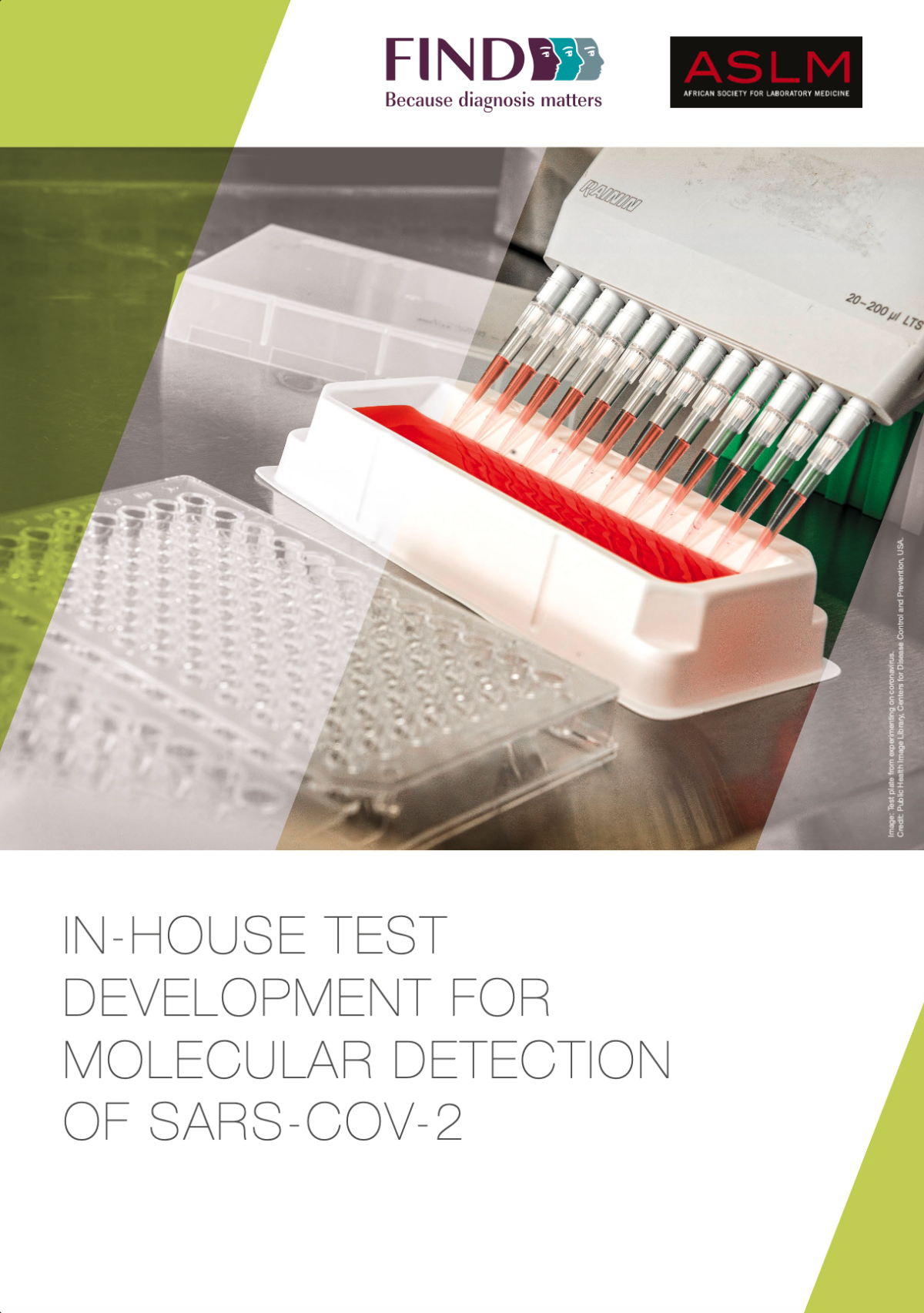
In-house test development for molecular detection of SARS-CoV-2

Roadmap to create diagnostic tests available in English, French and Portuguese.

This document provides guidance on the development of a new, in-house, real-time RT-PCR test for SARS-CoV-2 aimed at laboratories which have established molecular biology capabilities. 

The information – available in English, French and Portuguese – will also provide a roadmap for the creation of new molecular diagnostic tests for other emerging pathogens. 

It acknowledges the constraints  of resource-limited laboratories, and outlines  requirements for good molecular biology practices, including quality control and quality assurance.

Steps to success
When a new virus such as SARS-CoV-2 emerges, laboratories rely on time-tested methods of developing diagnostic tests when commercial assays are unavailable. 

These LDTs are rarely perfect on the first attempt. 

Ideally, these tests continue to develop and gain validation until formally certified for in vitro diagnostic use by a regulatory body.

Most LDTs do not progress to the point of formal certification for use. However, they should still be held to the highest standard of quality possible to mitigate the health and economic impacts of the emerging disease and help protect vulnerable populations.

Read the report here

Categories
Add Resources - Research & Development

Forum discusses research agenda for SARS-CoV-2 antigen rapid diagnostic tests

Participants identify key questions to take technical and programmatic research forward.

ACT-Accelerator diagnostic pillar partners joined in a virtual forum to discuss the development of a collaborative operational research agenda for SARS-CoV-2 antigen rapid diagnostic tests (Ag-RDTs). 

The forum, held on 29 October 2020, was organized around three breakout groups according to three thematic areas for SARS-CoV-2 Ag-RDTs:

  • Technical research
  • Programmatic research
  • Modelling

Group participants focused on understanding the performance of Ag-RDTs when implemented in real-world settings and across specific populations. 

Priority questions

  • Performance
  • Use cases
  • Samples
  • Bio-safety
  • Quality control
  • Training and delivery
  • Economics and cost.

Participants discussed steps to advance the Ag-RDT research agenda and agreed that there should be multiple future discussions on this. 

Read the report here

Categories
Add Resources - Research & Development

Rapid diagnostic tests for COVID-19

Key takeaway: Both types of RDTs are crucial for effective public health management.

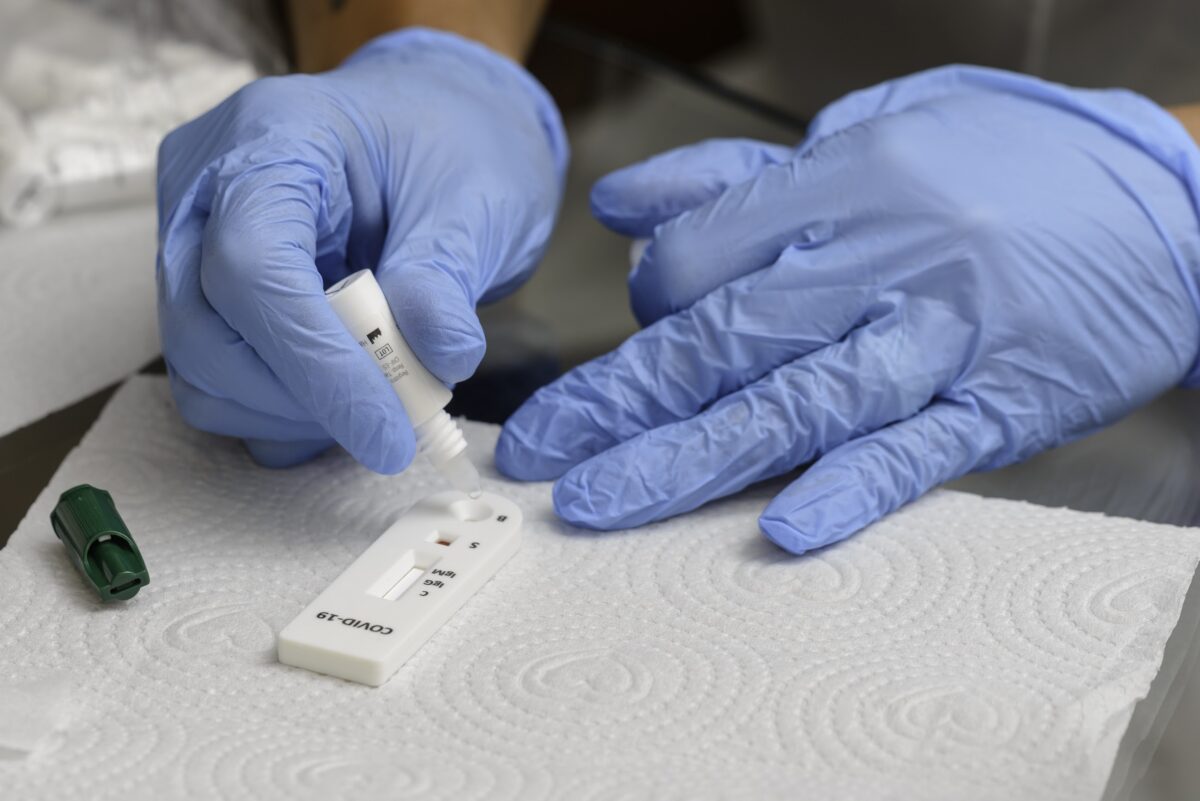
Rapid diagnostic tests (RDTs) for COVID-19 can detect either antigen (Ag) or antibody (Ab), and both types of tests have important roles.

A combination is needed for effective patient management and public health planning.

This May 2020 report outlines general information on Ag- and Ab-detection RDTs for COVID-19, and suggested uses for them.

Polymerase chain reaction (PCR) or Ag

  • Directly detects the virus and should be prioritized for diagnosis and monitoring
  • Prioritize for case management to enable decentralized testing – particularly where PCR testing is limited.

Immune response tests or Ab

  • Tests detecting viral immune response tests can be complementary for clinical care
  • Should be prioritized for seroprevalence and epidemiological purposes
  • Prioritize Ab RDTs for seroprevalence surveys to inform public health measures and testing of contacts to establish previous viral spread.

The value of any test is dependent on factors such as the test performance, or sensitivity/specificity, as well as the epidemiological context, or prevalence in the population where it is used, and timing.

The report also lists unique features of SARS-COV-2 to consider when using RDTs and specifies operational characteristics, such as how to interpret test results. 


Read the report here

Categories
Add Resources - Research & Development Featured Work - Manufacturing Featured Work - Research & Development

US$7 million investment accelerates availability COVID-19 self-tests in low- and middle-income countries

Key takeaway: Successful applicants to manufacture 240 million low-priced tests a month.

On March 31 2021, FIND launched a request for proposals (RFP) to develop, manufacture, and launch to market COVID-19 self-tests in low- and middle-income countries (LMIC). 

The RFP called for quality-assured and easy-to-use self-tests that were accurate and affordable. It was prepared in the context of the Access to COVID-19 Tools (ACT) Accelerator Diagnostics Pillar, co-convened by FIND and the Global Fund.

Innovators, developers and manufacturers of in vitro diagnostics, and LMIC-based diagnostic stakeholders, were invited to submit proposals.

A package of US$7 million was offered in support, funded via grants to FIND from the German Federal Ministry of Education and through KfW and other donors.

International expertiseFrom 80 applicants, contracts were signed with four companies, and their names announced in February 2022:

Each has committed to manufacturing up to 60 million tests per month, priced from US$1–2 per test.FIND will conduct independent clinical evaluations of test performance, with support dependent on meeting project milestones.

Categories
Add Resources - Manufacturing Featured Work - Research & Development

US$21-million investment in molecular diagnostic platforms

FIND chooses four firms with promising new platforms for decentralized diagnosis of COVID-19 and other illnesses.

FIND is investing US$21-million to speed the development, manufacturing and launch of affordable, multi-pathogen, molecular diagnostic platforms.

These platforms are specifically aimed at decentralized settings in low- and middle-income countries (LMICs), and will detect different respiratory pathogens, including COVID-19.  

FIND launched the request for proposals in August 2021, in the context of the Access to COVID-19 Tools (ACT) Accelerator diagnostics pillar, which it co-leads. 

The submission deadline was September and the successful firms announced on December 2021.

The four firms are:

The German Federal Ministry of Education and Research (BMBF) is funding the investments through KfW and other donors. 

Read the full report here

Categories
Add Resources - Manufacturing Add Resources - Research & Development Featured Work - Awareness & Advocacy

Call to boost access to cheaper rapid diagnostic tests

Key takeaway: RDT agreements boost local manufacturing to supply millions of low-cost, high-quality tests for lower-income nations.

In July 2020 FIND and Unitaid launched a call via the Access to COVID-19 Tools Accelerator Diagnostics Pillar for expressions of interest (EOI) to speed up availability and scale up manufacturing of rapid diagnostic tests (RDTs) for COVID-19.

The EOI was geared towards increasing supply of regulatory approved, fit-for-purpose SARS-CoV-2 Ag RDTs that met WHO criteria of quality, cost and accessibility. This was particularly needed in low- and middle-income countries (LMICs).

Innovators, developers and manufacturers of RDTs and in vitro diagnostics, and LMIC-based diagnostic stakeholders, were invited to submit proposals.

Interventions included:

  • Accelerating late-stage product development and optimization
  • Facilitating technology transfer activities
  • Conducting performance evaluation studies to support regulatory submissions
  • Increasing production capacity
  • Addressing supply chain challenges
  • Strengthening local capacity for development and deployment of new tests within national testing strategies. 

Driving down prices and supporting the use of less invasive specimens to enable faster LMIC uptake were also critical. 

Over 100 applications were received, with 34 selected for review by a panel of external experts. 

A first collaboration, with Premier Medical Corporation in India, was announced in January 2021. By July that year, additional technology transfer agreements were signed with stakeholders in Africa and Latin America.

These included an agreement with DCN Dx to transfer know-how to WAMA Diagnóstica (Brazil), and with Bionote and Mologic to transfer know-how to DIATROPIX of the Institut Pasteur de Dakar (Senegal). 

There is a separate partnership between Viatris (South Africa) and Guangzhou Wondfo Biotech (China).

These agreements will lead to a dramatic increase in local manufacturing, ultimately making more than 250 million low-cost (US$2–2.50) tests available for LMICs. 

Categories
Add Resources - Research & Development

SARS-CoV-2 diagnostic use cases

Nine examples of when to use COVID-19 investigative procedures

FIND has supported partner Halteres Associates in developing diagnostic use cases for SARS-CoV-2 tests, which highlight the comparison, contrast and implications for each. 

This report outlines nine diagnostic use cases where further assays or investigative procedures are warranted. 

It provides a description of each use case, other possible technologies required, more information on the sample and comments.

Use cases for SARS-CoV-2 assays

  1. Triage of symptomatic individuals in an epidemic setting
  2. Triage of symptomatic individuals in endemic settings
  3. Triage of at-risk pre-symptomatic and symptomatic individuals in endemic settings
  4. Confirmatory testing
  5. Diagnosis of symptomatic individuals in endemic or epidemic settings
  6. Differential diagnosis in endemic or epidemic settings
  7. Previous SARS-CoV-2 exposure
  8. Surveillance in sites of previous or potential outbreaks
  9. Environmental monitoring.

Learning curve
Before developing systems, however, it is essential that test developers understand the details of use cases for SARS-CoV-2 testing. 

This includes who will be tested, by whom, the site of testing, using which samples, under what conditions, and what the minimum acceptable clinical performance requirements are likely to be. 

The most important component is intended use: what clinical decision the test will enable, and in what patient population. 

For more information, contact us or Halteres Associates.

Read the full text here

Categories
Add Resources - Research & Development

How genomics can help track new SARS-CoV-2 variants

Sequencing data key for monitoring virus and understanding impact of therapeutics.

This report on SARS-CoV-2 variants, developed and published for FIND (11 March, 2021) by PHG Foundation, explains how genomics helps to monitor the evolution of coronavirus “variants of concern”, or VOCs.

It outlines how genomic surveillance and sequencing have supported identification of new variants as well as the impact these variants have had on diagnostic tests and public health measures. 

This process has also significantly advanced vaccine design and development. 

Ongoing surveillance is required not only for known VOCs, but also for new “variants of interest” (VOIs).

Thinking ahead
Data produced has enabled further understanding of the variants, helping to inform future surveillance and the impact mutations may have on vaccines, diagnostics and therapeutics. 

Various countries have invested in sequencing infrastructure and resources to help combat the virus, and have put public health measures in place in response. 

Continued investment in sequencing capabilities and data sharing, as well as a variety of skills and expertise from multiple backgrounds, is needed to make genomic surveillance successful. 

In addition, it is important to limit the spread of the virus to prevent the emergence of additional variants which may be even more transmissible. 

Sequencing data continues to be key for monitoring the virus and understanding the impact of therapeutics.

An appendix on resources actively monitoring VOCs is included.

Read the full report here